By Engr. Pius Ebong
For more than two decades, the Amakpe Refinery Project has remained one of the most misunderstood industrial initiatives in the history of Akwa Ibom State. It is often mentioned as another failed project, another victim of Nigeria’s developmental challenges, or simply another abandoned dream. Yet, beyond the myths and speculation lies a story that deserves to be revisited—not to assign blame for the past, but to inspire action for the future.
The greatest mistake we can make is to see the Amakpe Refinery merely as a failed project. It was much more than that. It represented an early attempt to position Akwa Ibom State as a centre for petroleum refining and industrial development. Although that vision was never realised, the opportunity it presented has not disappeared. If anything, it is even more compelling today.
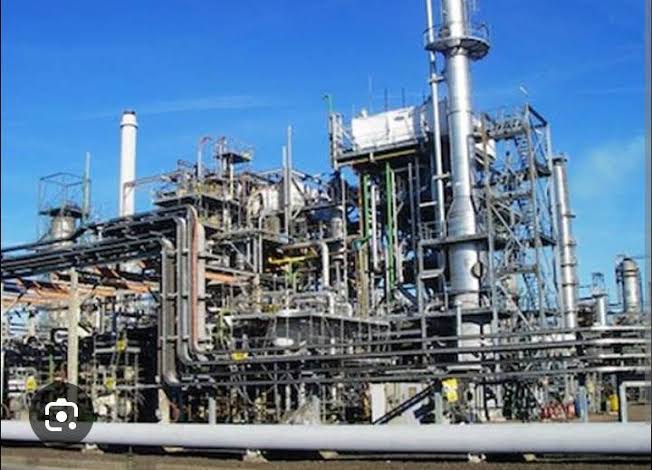
There are several misconceptions surrounding the project that deserve clarification. One of them is the belief that the refinery was designed to produce petrol from inception. That is not technically correct. The Amakpe Refinery was conceived as a 12,000-barrel-per-day straight-run modular refinery. Its first phase was designed primarily to produce Automotive Gas Oil (diesel), Dual Purpose Kerosene, straight-run naphtha and fuel oil through atmospheric fractional distillation.
Like many modular refineries around the world, it was intentionally designed for phased expansion. The initial objective was to establish refining operations with relatively low capital investment. Subsequent phases would have introduced secondary processing units such as catalytic reformers and hydrocrackers, enabling the refinery to upgrade straight-run naphtha into Premium Motor Spirit and improve overall product yields. From an engineering standpoint, this was a sound and commercially sensible approach that remains widely adopted in modular refinery development today.
The project itself was not an illusion. It secured regulatory approvals, attracted international financing support and advanced well beyond the conceptual stage. Engineering work progressed significantly, and major refinery process modules were reportedly fabricated, inspected and certified for shipment. Unfortunately, those modules never reached Nigeria, and the refinery was never completed.
Over the years, many people have concluded that corruption alone caused the project’s collapse. While corruption has undoubtedly undermined numerous infrastructure projects in Nigeria, there is no publicly available evidence establishing it as the principal reason for the failure of the Amakpe Refinery. Such conclusions remain speculative.
The available evidence points instead to a combination of factors. Funding constraints, the inability to achieve full financial closure, political and institutional uncertainties, regulatory challenges and an unfavourable investment climate collectively appear to have frustrated implementation. Several important questions also remain unanswered. Why were the fabricated modules never shipped? Were all financing conditions fulfilled? Did every stakeholder discharge their obligations? Did political disagreements affect investor confidence? These questions deserve objective historical investigation, not conjecture.
What is beyond dispute, however, is that the project did not fail because there was no market. Nigeria has remained one of the world’s largest importers of refined petroleum products despite producing substantial volumes of crude oil. Neither did it fail because Akwa Ibom lacked crude oil or natural gas. On the contrary, Akwa Ibom remains one of Nigeria’s richest hydrocarbon provinces, blessed with abundant crude oil reserves, enormous natural gas resources and strategic access to export infrastructure.
The irony is difficult to ignore. For decades, Akwa Ibom has produced enormous wealth from crude oil while most of the value addition associated with refining has taken place elsewhere. We have exported crude and imported refined products. We have watched jobs, industries and investment opportunities migrate to locations where our own raw materials are processed.
This is not merely an economic contradiction; it is a lost development opportunity.
The global energy industry has changed significantly since the Amakpe Refinery was first conceived. Modular refinery technology has become more efficient and more affordable. Nigeria’s regulatory environment has improved considerably. Private investment has demonstrated that refining can be commercially viable under the right conditions. The success of privately owned refineries across the country has removed any lingering doubt that indigenous investors can participate meaningfully in petroleum refining.
This is precisely why the conversation should now move beyond the history of Amakpe to the future of refinery development in Akwa Ibom State.
The state possesses virtually every ingredient required for a successful refinery project. It has abundant crude oil, vast natural gas reserves, access to export terminals, a strategic coastal location, a large domestic market and proximity to regional markets across West and Central Africa. Equally important, Akwa Ibom has produced thousands of highly accomplished professionals working in the petroleum industry, engineering, finance, project management, banking, law and international business.
Many of these professionals occupy senior positions in multinational corporations, financial institutions and government agencies across the world. Others have built successful businesses and accumulated valuable investment experience. Collectively, they represent one of the greatest untapped assets available for the industrial transformation of the state.
It is time to harness that asset.
I therefore wish to make a direct appeal to Akwa Ibom professionals, entrepreneurs and investors, particularly those living and working in the diaspora. The time has come to look beyond individual achievements and begin investing collectively in projects capable of transforming our state’s economy.
The establishment of a privately promoted refinery in Akwa Ibom should become one of those projects.
This is not a task for government alone. Governments create policies and provide enabling environments, but enduring industrial development is usually driven by private capital, technical expertise and entrepreneurial vision. Across Asia, the Middle East and increasingly across Africa, diaspora investors have become major contributors to infrastructure development and industrialisation in their countries of origin. There is no reason why Akwa Ibom cannot chart a similar course.
A refinery is far more than a petroleum project. It is an industrial ecosystem. It creates employment for engineers, technicians, fabricators, accountants, lawyers, transport operators, information technology specialists and numerous small and medium-scale enterprises. It stimulates petrochemicals, plastics manufacturing, fertiliser production, marine services and logistics. It expands the tax base, encourages technology transfer and creates long-term economic resilience.
Indeed, a refinery could become the foundation upon which a broader industrial corridor is developed, anchored on the abundant oil and gas resources that God has blessed Akwa Ibom with.
History has already recorded the Amakpe Refinery as an opportunity that was never realised. We cannot change that history. What we can change is the future.
Rather than continue to lament what was lost, let us build what is still possible.
I therefore call upon Akwa Ibom professionals, business leaders, institutional investors and our sons and daughters in the diaspora to come together to champion the establishment of a modern privately owned refinery in our state. Let us mobilise our financial resources, technical expertise, global networks and entrepreneurial capacity to unlock the enormous economic potential that lies beneath our soil.
The crude oil belongs to us. The natural gas belongs to us. The technical knowledge exists among us. The investment capacity is increasingly within our reach.
What is required now is vision, collaboration and the courage to act.
If the Amakpe Refinery symbolised a missed opportunity for one generation, let the refinery we build together become the defining industrial achievement of the next. That is the challenge before us, and that is the legacy we owe to future generations of Akwa Ibom people.
Pius Ebong (Vice President Ibom Minerals Energy and Maritime Professionals Association) IMEMPA writes Via piusebong@gmail.com (+2348033138956)