By Benjamin Jimmy
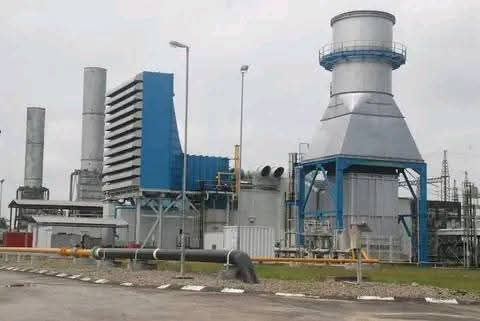
Ibom Power, a state-owned electricity generating company, located in Ikot Abasi Local Government Area, is presently facing a lot of constraints, resulting in underperformance.
Information available reveals that these constraints arise from the N28 billion debt owed to the company by the federal government, regular shortfall in gas supply to set the turbines to work, illiquidity, ageing infrastructure, lack of investment, sabotage on transmission lines and facilities, such as vandalism, theft, meter by-pass, among other unwholesome practices.
Findings show that, of all the constraints facing Ibom Power, the huge debt profile appears to have the greatest weighing- down effect on the company’s capacity to buy gas from Accugas Limited in Eket – a company that drills and produces gas – to be able to turn on the two functional turbines out of the three that Ibom Power started with, some years back.
The N28 billion debt, it was gathered, is owed by the Nigerian Bulk Electricity Trading (NBET), a body that plays an intermediary role in the Nigerian electricity value chain as the primary bulk purchaser and reseller of electricity. Sadly, this institution is also indebted to other Generation Companies (GENCOs) in Nigeria. Available records report that at the end of 2024, NBET’s legacy debt owed to all the GENCOs in Nigeria, including Ibom Power, stood at N4 trillion.
Recent records have however shown that NBET paid Ibom Power 30% from the entire N28 billion debt it owed the company three weeks ago – an amount, The Crest gathered, still leaves Ibom Power in penury – unable to buy gas from Accugas Limited to sustain electricity generation and evacuation to the national grid.
Corroborating this development during an interaction with some journalists recently in his office, the Managing Director of Ibom Power Company Limited, Engr. Camillus Umoh, said the company might have temporarily halted power generation, largely due to the opaque and interlinked nature of the electricity environment, Ibom Power still remains active as a generation company in Nigeria.
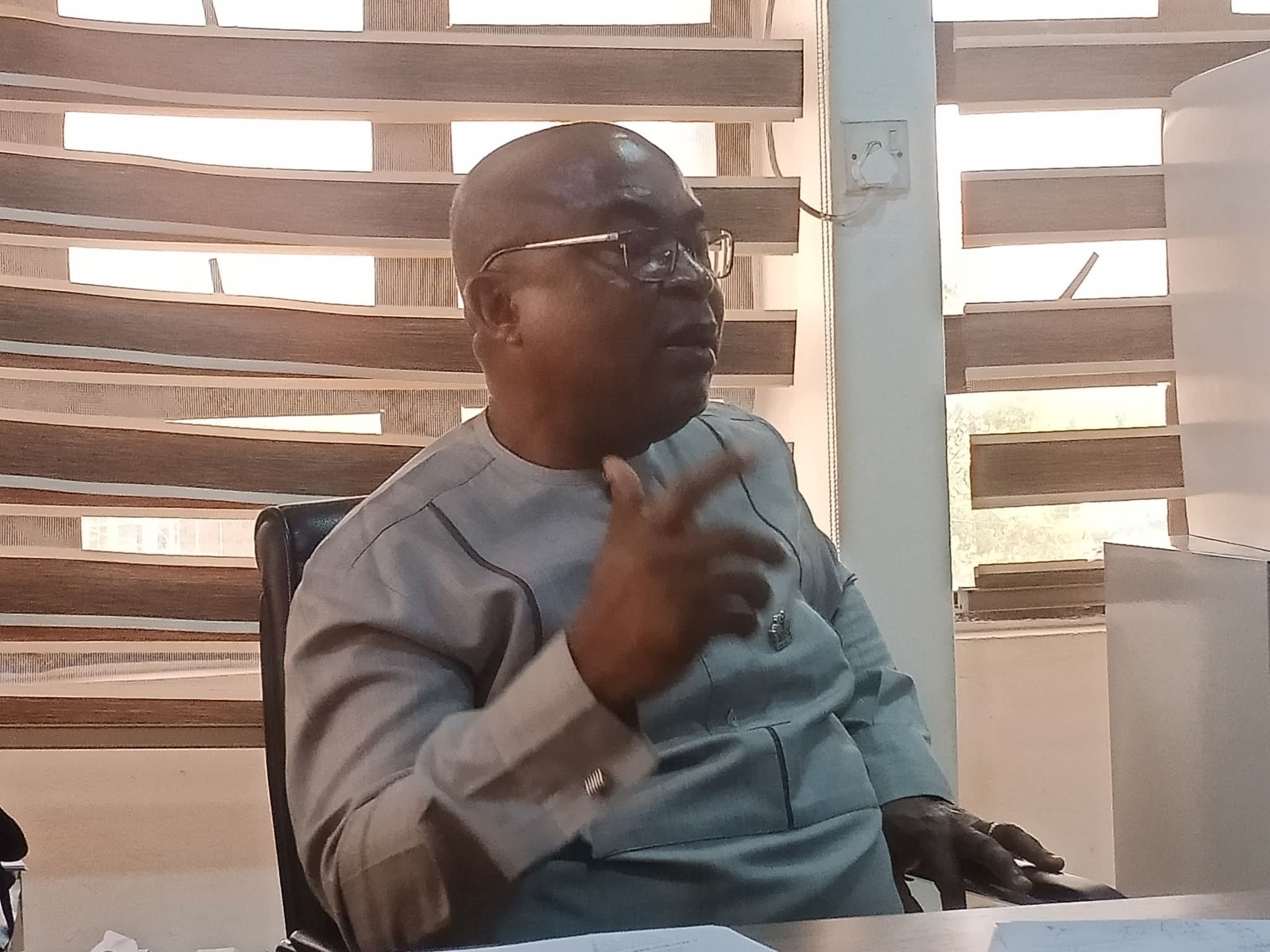
“Ibom Power is still very much available; very much around. If Ibom Power were not on ground, three weeks ago, NBET would not have paid the company.
“Ibom Power has been generating up until 21 November, 2025. It has only stopped generating; stopped operating as to the turbines to the extent that there is no gas”.
Ibom Power is also grappling with lack of investment, or better still, fear of investors putting in their money in the sector. This fear has been said to account for the inability of the GENCOs, including Ibom Power, to generate electricity non-stop. Unfortunately, this fear is emboldened by the fact that there are other lacunae along the value chain that make it extremely difficult for NBET to make returns on investment, and even to attract other investors. This is clearly a crossroad where NBET is – not being able to make returns and pay off its debt to Ibom Power to, in turn, pay Accugas Limited for constant supply of gas.
Still challenging Ibom Power is a case of sabotage by some consumers. A lot of evidence has pointed to the fact that some electricity consumers who own prepaid meters in their homes often by-pass them to steal from the system. There is even another level of sabotage, maybe, the highest of it, where criminal elements either steal or vandalise transmission and distribution lines and other facilities. In the event of vandalism, for instance, Ibom Power will not generate electricity because there will be no transmission and distribution. With this state of affairs, it stands a serious inhibition on the head, first of all, for Distribution Companies (DISCOs) to be able to generate revenue to pay Transmission Companies (TCN), who must also remit payment to GENCOs through NBET. In the electricity ecosystem, a single act of sabotage at any point, or frustration, ripples through the entire value chain.
For those who understand the complexity and interdependency of all the components in the power ecosystem, it would not be surprising that Ibom Power is inhibited by these and many other issues. Looking at the entire value chain which begins from the very point of gas drilling in Eket, and pipping to the company in Ikot Abasi, and through to electricity generation, evacuation to NBET as the sole off taker of power, transmission of this power by TCN to DISCOs and finally, from the DISCOs down to the end consumers, one may have to exonerate Ibom Power from any thought of inefficiency.
Again, corroborating this position, Engr. Umoh said: ” Ibom Power was conceived by Obong Attah, with the intention of providing power to Akwa Ibom people. But, we must appreciate the fact that electricity is an interlinked value chain. The ecosystem is made up of supplier companies, generation companies, transmission companies, distribution companies and the consumer. In-between these components are interfaced, all sorts of equipment, activities – all to the extent of fostering the delivery of electricity to the last consumer. From the gas point in Eket to Ikot Abasi where the company is, through the conversion into mechanical energy to transmission, there must be a continuity of system. Any point that there is a cut in the conductor line, it means electricity will not get to the final consumer. Therefore, everybody must collaborate. Once either the TCN, DISCO or GENCO like Ibom Power cannot do its bid in that value chain, the consumer gets no electricity”.
A careful study of Ibom Power through this report will reveal one thing: the fundamental challenge sponsoring the going -off and coming- on of this company is lack of adequate gas supply. This situation, unfortunately, is the way it is, because there was no thought to build a backup gas well, in the event that there may be issues with this single one supplying at present. Even if such thoughts or plans came to mind, lack of funds would have been advanced as a challenge.
According to the MD, ” what has happened to our gas is that after 14 years of supply from a direct well, the well pressure has reduced and now needs secondary recovery optimisation method to bring out more gas. The only option is to have a backup well. Every system must have a backup, but unfortunately, there was no backup supply well for gas. Why was there no backup well? It is because the illiquidity; the lack of funds in the system did not incentivize and make it sufficiently attractive enough to the gas company to drill a backup well”.
But it is interesting that in all of this, the Managing Director of the company, Engr. Camillus Umoh, has not relented in his pragmatic approach to bringing solutions to these power albatrosses. In the immediate, he is currently working out a robust gas plan with other gas companies to ensure that Ibom Power is no longer starved of gas. This collaboration is essential because, the only source of gas supply, from information gathered, now prefers to supply gas to companies that are not indebted to it like Ibom Power is.The partnership will also address the need for a backup well to support the existing one.
The MD is also working and holding talks with investors like banks and other big institutions to see potential in Ibom Power and invest substantially. This is coming in the realisation that no company survives without investments from the private sector.
As for the issue of sabotage on facilities, Engr. Umoh is currently seeking collaboration with Nigeria Security and Civil Defence Corps (NSCDC), to upscale protection of critical electricity infrastructure that sometimes halts the operations of Ibom Power whenever there is vandalism or theft.
Beyond the aforementioned, the power summit hosted by the Akwa Ibom State Government last year is being considered. The contributions, ideas and recommendations that came forth have long been segmented into forms that will help the company address the short, medium and long term challenges, with a view to actualising the purpose for which the company was set up.
With the efforts being made my Engr. Camillus Umoh, it is hoped that Ibom Power will soon overcome all its challenges and other interlinked issues within the electricity value chain in Nigeria.