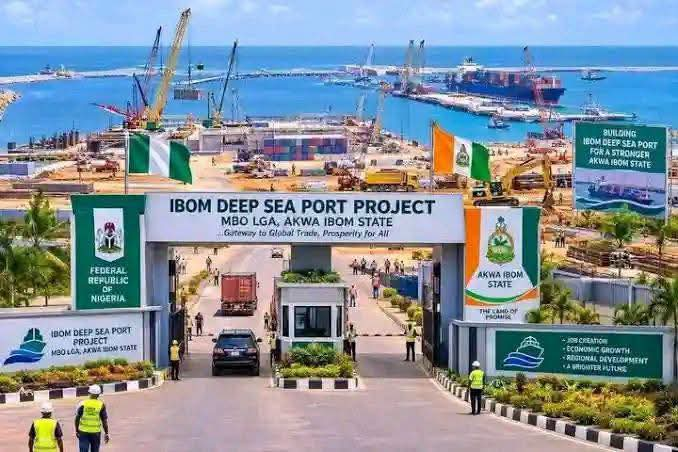
The events surrounding President Bola Ahmed Tinubu’s visit to Akwa Ibom State on Friday, November 6, 2026, and the announcement of approval for the Ibom Deep Sea Port have once again brought the long-delayed project into public discussion. Unfortunately, much of the conversation appears to have focused on political credit-taking and the assignment of blame rather than a clear assessment of the project’s history, the approvals already obtained and the practical steps required to move it towards implementation.
What played out was, in many respects, a familiar pattern of political buck-passing. A strategic economic project that has been in the pipeline for several years was presented in a manner that could leave the impression that its realisation was dependent primarily on a fresh Federal Government approval. That narrative deserves closer examination.
The Ibom Deep Sea Port is not a new project conceived by the present administration. Its development dates back several years, and significant technical, regulatory and administrative milestones had already been achieved before the end of the previous Federal Government. Most notably, the Federal Executive Council under President Muhammadu Buhari approved the project’s Full Business Case in December 2020. This was a major milestone that moved the project beyond the preliminary stages of conception and feasibility studies.
The project had also attracted considerable international investment interest. Several international consortia participated in the bidding process, including Chinese companies and their international partners. Bolloré/PowerChina eventually emerged as the preferred bidder. The involvement of these companies demonstrated that the project had progressed sufficiently to attract serious commercial attention.
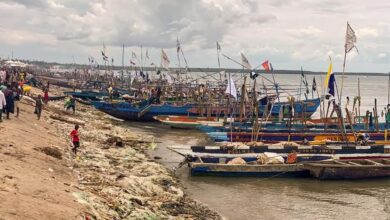
However, the process subsequently encountered difficulties arising from disagreements over the location of the port and the interests of the original host communities. The controversy surrounding the proposed relocation of the original Ibaka Deep Sea Port towards the Ibeno axis generated objections, particularly from the Oron people, who considered the development a departure from the original project conception and an encroachment on their legitimate host-community interests.
Petitions were submitted, and the controversy became a significant setback to the investment process. The then Akwa Ibom State Government attributed the withdrawal or reconsideration of investor participation partly to these petitions. Although the precise reasons for the investors’ decisions require further documentary clarification, there is sufficient public evidence to establish that the location controversy and host-community objections became major complications in the project’s development.
The fundamental issue, therefore, is not simply whether the Federal Government has approved the Ibom Deep Sea Port. It is what happened to the investment arrangements that had already been developed, why the original process was not successfully concluded and what successive administrations have done to resolve the issues that stalled implementation.
Interestingly, in May 2026, the Managing Director of the Nigerian Ports Authority reportedly confirmed that the Federal Government had completed the necessary approvals, certifications and compliance processes for Ibom Deep Sea Port, alongside other proposed seaports, while investor negotiations remained ongoing. This is an important institutional confirmation that the project had progressed beyond the initial approval stage.
Consequently, President Tinubu’s announcement of another approval during his November 6 visit to Akwa Ibom calls for clarification. What exactly is the scope of this latest approval? Is it a fresh project authorisation, a reaffirmation of previous approvals, an administrative clearance or a new commitment to facilitate investment and implementation? These distinctions matter because they determine the actual responsibilities and next steps of the Federal Government and the Akwa Ibom State Government.
It would be unfortunate if the present discussion ended with another round of political congratulations and competing claims over who deserves credit for approving the project. Akwa Ibom people have heard enough promises about the economic transformation that the port is expected to bring. What they need now is evidence of progress towards construction and eventual commercial operations.
The immediate priority should be to revisit the original investment framework, establish the present status of the preferred-bidder arrangement, identify the outstanding regulatory and commercial requirements and engage credible international investors. Equally important is the need to address the concerns of the original host communities through transparent dialogue, equitable stakeholder participation and a mutually acceptable resolution of the location controversy. No major infrastructure project of this magnitude can sustainably progress without the confidence and cooperation of its host communities.
The Akwa Ibom State Government must also demonstrate continuity of policy and institutional memory. Strategic projects should not be treated as the exclusive political inheritance of successive administrations. The Ibom Deep Sea Port belongs to the people of Akwa Ibom State and, more broadly, represents an important national economic asset. Its development should transcend partisan considerations.
When completed, the port could significantly strengthen Nigeria’s maritime infrastructure, expand international trade opportunities, support industrial development in the South-South and South-East, create employment and provide an important gateway for regional commerce within the Gulf of Guinea. But these benefits will remain theoretical until the investment and implementation challenges are resolved.
The Federal Government, through the Nigerian Ports Authority, the Federal Ministry of Marine and Blue Economy and other relevant agencies, should therefore work with the Akwa Ibom State Government to produce a transparent implementation roadmap. Such a roadmap should identify the outstanding investment commitments, project financing arrangements, procurement responsibilities, host-community obligations and realistic construction milestones.
Above all, government should distinguish between approving a project and delivering it. The former is an administrative milestone; the latter is the real test of public leadership.
The Ibom Deep Sea Port does not need to become another casualty of political competition, administrative discontinuity or avoidable stakeholder disagreements. It needs leadership that can convert previous approvals into investment commitments, investment commitments into construction and construction into a functioning economic asset.
Akwa Ibom deserves a deep seaport, not an endless conversation about a deep seaport. The time has come to move beyond the blame game and political buck-passing and concentrate on delivering the project.
• Pius I. Ebong is the Vice President Ibom Minerals Energy and Maritime Professionals Association