Tech innovators launch Project TAT AI in Akwa Ibom to revolutionise agriculture in Nigeria, Africa
by Itoro Bassey
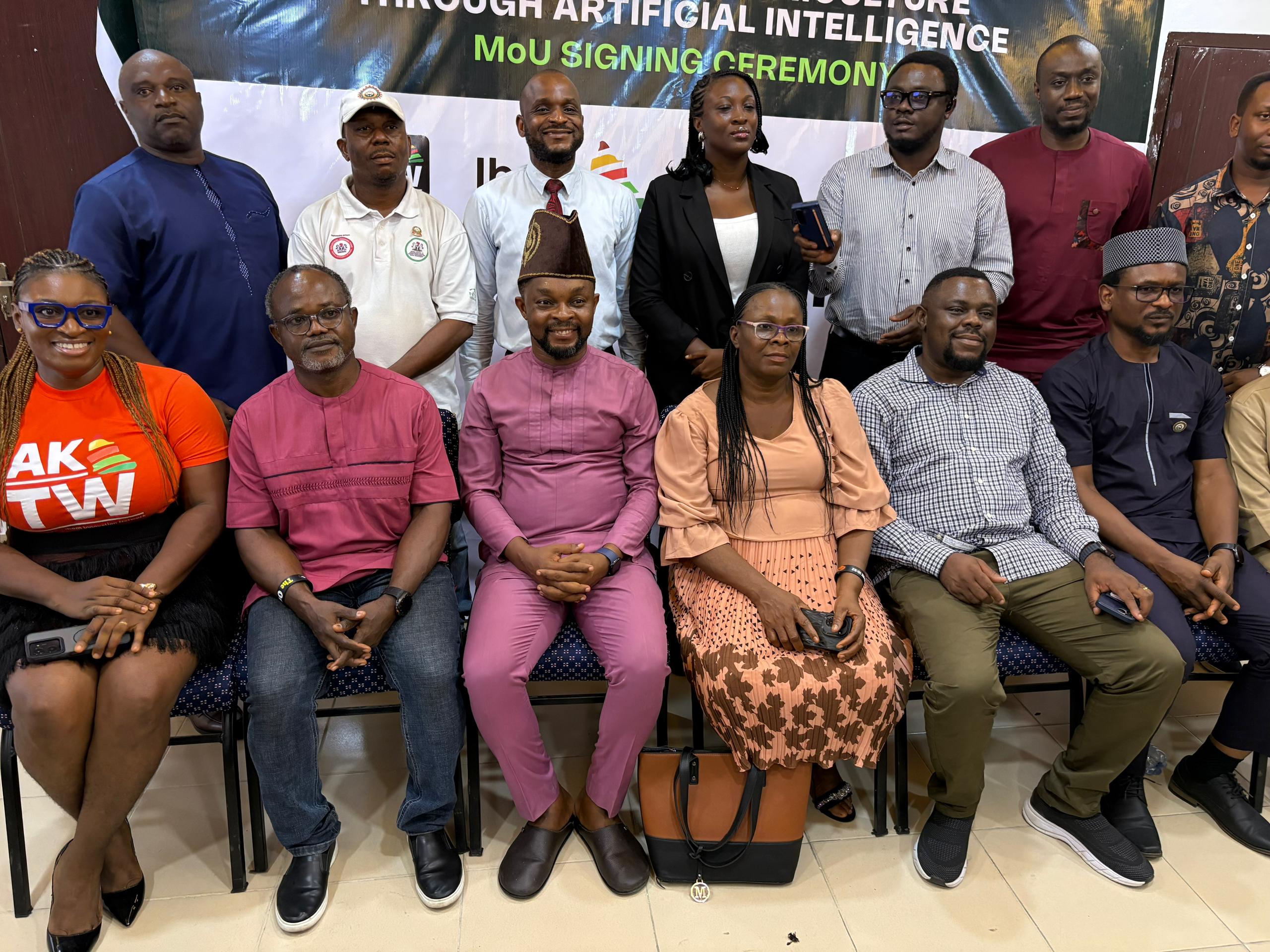
In a move to combat soaring global food prices and post-harvest losses, a coalition of engineers, academics, and tech visionaries, on Wednesday, signed a memorandum of understanding (MoU) officially launching Project TAT AI (Transforming Agriculture Through Artificial Intelligence).
The coalition, which includes the Ibom Innovation Network (IIN), the Nigerian Institution of Mechanical Engineers (NIMechE), Centre for Computational Intelligence, University of Uyo; Department of Mechanical Engineering, Akwa Ibom State University; Department of Mechanical & Aerospace Engineering, UNIUYO, and Technology Incubation Centre, Uyo, convened at the Start Innovation Hub in Uyo to formalise their commitment to integrating advanced technology into agriculture.
According to them, Project TAT AI aims to modernise farming practices across Nigeria and Africa by leveraging artificial intelligence (AI) to enhance productivity and efficiency.
Speaking at the MoU signing ceremony, the President Ibom Innovation Network, Engr. Hanson Johnson, emphasised the shift from “farming by chance” to data-driven decision-making, stating, “By integrating AI with mechanical engineering, we are providing farmers with the tools to predict, adapt, and scale. This isn’t just about technology; it’s about economic resilience for the entire region.”
Johnson, who is also the CEO of Start Innovation Hub, explained that the initiative focuses on addressing critical challenges in the food supply chain, including farming with precision, autonomous harvesting and smart storage solutions, which utilise robotics and Internet of Things (IoT) technology to reduce labour costs and prevent crop spoilage.
Echoing this sentiment, Prof. Uduak Asuquo, Director of the TETFund Centre for Computational Intelligence at the University of Uyo, highlighted the strategic shift in the sector.
“With the adoption of precision sovereignty, there is a turning point in the agricultural landscape. This means that IoT and AI are no longer experimental approaches but very important technologies to global food security.
“With techniques like soil heat maps and atmospheric intelligence, there is hope for an agricultural transformation through AI.”
Engr. Dr. Bassey Asanga, Chairman of NIMechE, described the collaboration as a patriotic duty to contribute to national development through innovative engineering solutions and sustainable practices.
Other speakers, including Engr. Dr. Bassey Nkanang called on young innovators, farmers and partners to engage with the initiative, recognising that those on the front lines often identify the most pressing problems.
Enoabasi Emah, Chairperson of the Akwa Ibom Tech Week planning committee, assured that the first wave of these AI innovations would be showcased on a global stage this November at the Akwa Ibom Tech Week 2026, to be hosted at the Ibom Hotels & Golf Resort.
“This is a beautiful synergy that is bound to create maximum impact,” Emah said. “Our community needs more of these collaborations to boost economic growth.”
Also, Mrs. Iniobong Elshaddai, Manager of the Technology Incubation Centre in Uyo, pledged the federal government’s support to protect intellectual property of the young inventors and fast-track their path to commercialisation.
As Project TAT AI enters its “Innovator Identification” phase, the members of the coalition said they are determined to position Nigeria at the forefront of the Fourth Industrial Revolution in agriculture, moving beyond traditional farming methods to embrace high-tech solutions.