

By Pius Ebong
Akwa Ibom State remains one of Nigeria’s most resource-endowed territories, contributing significantly to national crude oil output and ranking among the top beneficiaries of federal allocations derived from petroleum earnings. Yet, despite this central role in Nigeria’s energy economy, the State’s participation in the oil and gas value chain remains limited, far below its potential and far behind other oil-producing states.
Oil and gas is still the life wire of Akwa Ibom’s economy, powering government revenues and shaping public expenditure. But in terms of ownership, enterprise, and industrial presence, Akwa Ibom has remained largely at the periphery of the sector. To date, no indigene or state-owned entity ranks as a major player in the upstream, midstream, or downstream segments of the petroleum industry. The State’s highest level of involvement has been in the operation of filling stations and domestic gas outlets. These are important but represent only the entry-level of an industry whose real value lies in production, processing, and transformation. This paradox, being resource-rich yet industrially underrepresented, presents both a challenge and a unique opportunity.
As global energy markets evolve and Nigeria seeks to boost local refining capacity, the time is ripe for Akwa Ibom to step into a more strategic role. One of the most promising avenues is the establishment of a modular refinery within the State.


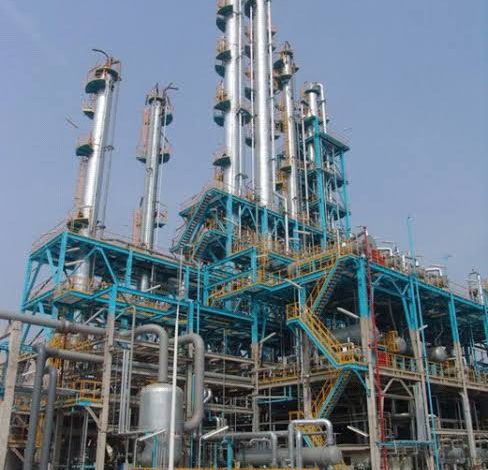
A modular refinery is not only feasible but strategically advantageous. Unlike conventional refineries that require massive capital investments and long construction timelines, modular refineries are scalable, cost-effective, and quicker to deploy, often within 12 to 24 months. With capacities ranging from 5,000 to 20,000 barrels per day, they offer a practical route into the refining business, especially for states and private groups seeking entry without the burden of mega-billion-dollar projects.
Akwa Ibom is uniquely positioned to take advantage of this opportunity. The State has a deep pool of serving and retired oil industry professionals, engineers, geoscientists, operations specialists, and managers, who possess extensive experience across upstream and midstream operations. This human capital is one of the State’s greatest assets, and it gives Akwa Ibom a natural advantage in pursuing refinery development.
Organizations such as the Ibom Minerals, Energy and Maritime Professionals Association (IMEMPA) are particularly well-placed to drive this initiative. IMEMPA has a concentration of industry veterans with strong technical knowledge, operational experience, and professional networks within the global petroleum sector. With the right framework, IMEMPA can provide the required technical guidance, operational leadership, and project management expertise needed to deliver a modular refinery project from conception to commissioning.
Beyond expertise, the financial capacity to execute such a project is not out of reach. With structured partnerships, capital can be sourced through a blend of private investors, development financiers, oil and gas operators, and government-linked agencies. Cooperation with International Oil Companies (IOCs), indigenous producers, and federal institutions such as NMDPRA and NNPC Ltd can further support the realization of this opportunity. State government backing, through land allocation, policy support, and investor facilitation, would also play a catalytic role.
A modular refinery in Akwa Ibom would do more than produce fuel. It would stimulate industrial growth, create employment, diversify state revenue, reduce dependence on imported petroleum products, and position the State as a meaningful participant in Nigeria’s energy transformation. It would also elevate the State from being a passive beneficiary of oil revenues to an active contributor within the sector.
The global and national energy landscape is shifting, and local refining is emerging as a key pathway to stability and self-sufficiency. For Akwa Ibom State, the window of opportunity is wide open. Through collaboration, strategic planning, and professional leadership, the vision of hosting a modular refinery is not only achievable, it is economically prudent and long overdue.
Akwa Ibom has the resources, the manpower, and the strategic location. What is needed now is collective commitment to seize the opportunity and redefine the State’s position in Nigeria’s petroleum economy. The future of oil and gas participation in Akwa Ibom may very well begin with the bold step of building its own modular refinery.
• Pius Ebong is the Vice President (Solid Mineral & Renewable Energy) Ibom Minerals, Energy and Maritime Professionals Association IMEMPA. He could be reached on 08033138956 or piusebong@gmail.com