

By Pius Ebong
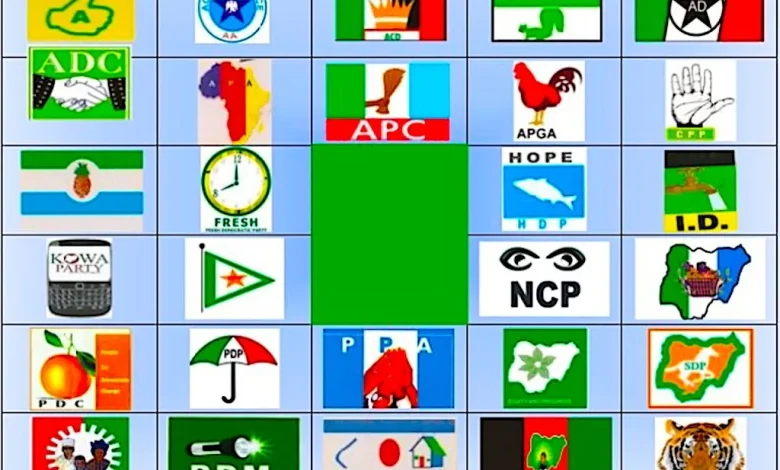
In a nation where political tides shift with the urgency of public expectation, the emergence of the National Democratic Congress (NDC) as a formidable force in Nigeria’s political landscape has opened a fresh chapter in the search for stability, reform, and credible governance. Once a fringe association of ideological purists, the NDC is now gaining recognition as the “new bride” courted by politicians, technocrats, civil society actors, and millions of Nigerians frustrated by cyclical governance failures.
The NDC began as an ideological movement formed by political reformists, policy intellectuals, and civic advocates who felt alienated by the transactional culture of Nigeria’s mainstream parties. Conceived initially as a platform for citizens-driven leadership renewal, it formalised as a political party following sustained public pressure for alternatives to the dominant parties. Over time, the NDC positioned itself as a centrist-progressive formation, emphasizing transparency, people-centric governance, and economic restructuring.
Nigeria’s current political atmosphere is charged, fluid, and unpredictable. Rising discontent over economic stagnation, insecurity, institutional decay, and worsening poverty has fostered widespread scepticism toward traditional political blocs. The public demand for accountability and competence is at an all-time high. This climate has forced political actors to rethink alliances, strategies, and long-held assumptions about voter behaviour.


In the last two years, multiple efforts have been made to forge a united opposition capable of challenging entrenched incumbency. Politicians, elder statesmen, and civic coalitions have pushed for a broad alliance to consolidate electoral strength. While previous attempts at coalition fractured under competing interests and leadership tussles, recent negotiations show greater maturity and urgency. Many observers believe that, unlike earlier experiments, the current climate gives a broad coalition a realistic fighting chance, particularly if centred around a credible platform such as the NDC.
The road to political realignment in Nigeria has not been smooth. Legal battles have intensified as parties grapple with internal disputes, congress irregularities, defections, and constitutional interpretation of party leadership and nomination processes. High-profile cases have tested the limits of party constitutions, INEC regulations, and judicial consistency. These legal contests have reshaped the power dynamics within established parties, creating political refugees who are now seeking fresh platforms with clearer internal governance structures, platforms like the NDC.
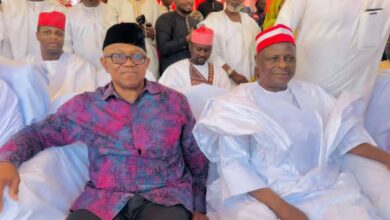
In recent months, the nation has witnessed a wave of defections from established parties. Former governors, legislators, and influential political strategists have announced their exit from old platforms, citing ideological fatigue, leadership crises, and a desire for purposeful engagement. Notably, figures such as Peter Obi, Rabiu Kwankwaso have announced their movements to NDC. Atiku Abubakar, Seyi Mainde and Rauf Aregbesola have been rumoured or reported to be engaging with other political platforms, fuelling public speculation about a major political realignment ahead of the next election cycle.
Whether or not every rumoured move materialises, one thing is clear: the NDC has become a magnetic centre for politicians who seek a clean slate and a receptive base.
NDC is now positioning itself as the home for Nigeria’s expanding progressive coalition. Its relatively clean slate, internal discipline, and openness to reform make it an attractive rallying point for young voters, professional groups, diaspora advocates, and disillusioned political stakeholders. The party’s willingness to negotiate broad-based alliances, adopt transparent primaries, and integrate technocratic expertise sets it apart from the old establishment parties.
A coalition anchored around the NDC could merge grassroots enthusiasm with elite competence, an ingredient long missing from Nigeria’s political experiment.
Nigeria stands at a crossroads. The country’s youth bulge, economic pressures, and rising democratic awareness have created conditions for a transformative political moment. If managed responsibly, the NDC-centred coalition could become the biggest political reconfiguration since 1999, one that redefines governance priorities, restores public trust, and charts a developmental path anchored in accountability and innovation. But this future is not automatic. It requires deliberate work, unity of purpose, and national commitment.
Nigeria is ripe for a political rebirth, and the NDC has emerged as the new bride, beautiful not because it is perfect, but because it represents hope, renewal, and the possibility of a better political marriage.
This is a clarion call to citizens, stakeholders, and patriots: embrace the new bride, join hands in shaping her character, and work collectively toward the consummation of this proposed marriage between Nigerians and the NDC. The future belongs to those who dare to build it.
Pius Ebong is a Concerned Citizen of Nigeria.