

From Raw Exports to Value Creation: The Rise of Homegrown Technologies in Mining

From Raw Exports to Value Creation: The Rise of Homegrown Technologies in Mining
By Pius Ebong
Nigeria has grappled with a structural disadvantage in its minerals sector: abundant deposits, yet limited value capture. While global commodity markets continue to reward refined products and high-grade concentrates, the country still exports most minerals in their raw or minimally processed state.
This position at the bottom of the value chain has long constrained pricing power and suppressed the true economic potential of Nigeria’s mineral wealth.
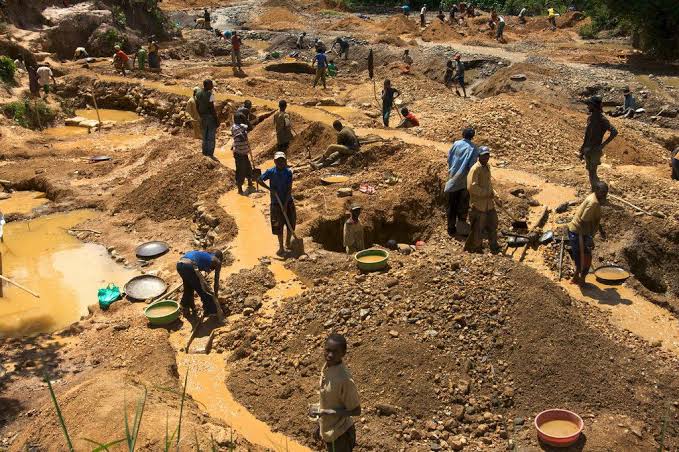
Today, however, a quiet but significant transformation is underway. Across mining communities from Nasarawa to Ebonyi, and from Ogun to Plateau, indigenous technology is beginning to reshape production practices, reduce costs, and most importantly, improve the quality of mineral outputs. Local engineers, metallurgists and fabricators are developing solutions rooted in Nigeria’s realities—equipment designed for local geology, processing systems tailored to artisanal and mid-scale operators, and analytical tools that improve accuracy in grading and pricing.
These homegrown technologies are helping producers upgrade mineral quality, achieve better consistency, and reduce impurities—critical factors in commanding stronger prices in international markets. Locally fabricated crushers, modular processing plants, ore concentrators, and real-time grade monitoring systems are replacing high-cost imported equipment. The result is improved efficiency, reduced downtime and a growing ability among Nigerian producers to meet international specifications that attract premium buyers.




The shift toward indigenous innovation is also strengthening the country’s prospects for value addition. When minerals are processed into concentrates, refined metals, or intermediate industrial materials, their value rises significantly, opening doors for downstream industries such as steel rolling, ceramics, battery minerals processing and precision engineering. Each layer of transformation not only boosts revenue but also cushions the economy from global commodity price swings.
For investors, this evolution presents a compelling opportunity. Firms that integrate indigenous technology enjoy lower operating costs, better control over maintenance, and faster turnaround times—all key drivers of profitability in the mining sector. Local innovation hubs, fabrication workshops and mineral research centres are becoming strategic partners for mining companies seeking cost-efficient, reliable and adaptable technologies.
To sustain this momentum, Nigeria needs a policy environment that consciously supports indigenous innovation. This includes stronger financing for mineral research institutions, incentives for fabrication and equipment manufacturing, structured collaboration between universities and mining firms, and enforceable standards for mineral testing and certification. A gradual but deliberate beneficiation policy will further ensure that minerals undergo at least basic processing before leaving the country.
What is emerging is a new narrative—one in which Nigeria transitions from a supplier of raw materials to a producer of high-value mineral and metal products. By deepening its technological capacity at home, the country can secure better pricing, expand industrial capacity and build a more competitive presence in global markets. The rise of indigenous technology is not just an industrial upgrade; it is a strategic reorientation toward wealth creation, resilience and long-term national competitiveness.
Pius Ebong +2348033138956 piusebong@gmail.com is a Metallurgical Engineer and a Solid Mineral Consultant