
AKIRS unveils 50 tax reliefs, exemptions for low-income earners, SMEs in new Tax Reform Laws (FULL LIST)
• Individuals earning ₦800,000 annually exempted from PIT • VAT at zero rate on essential goods, services


By Itoro Bassey & Benjamin Jimmy
The Akwa Ibom State Internal Revenue Service (AKIRS) has announced the introduction of 50 tax exemptions and relief measures put together by the Nigerian government to reduce the financial burden on low-income earners, average taxpayers, and small businesses, as part of new tax reform laws set to take effect on January 1, 2026.
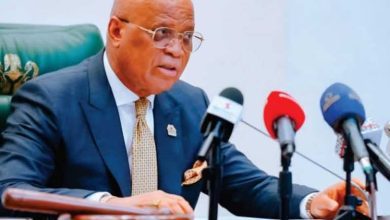
Sir Okon Okon, the Executive Chairman of AKIRS and a member of the Presidential Fiscal Policy and Tax Reforms Committee, made the announcement last Friday during a Strategic Stakeholders’ Engagement on the New Tax Regime at the NUJ Press Centre in Uyo.




The meeting was attended by the Commissioner for Finance in Akwa Ibom State, Mr Emem Bob; officials of AKIRS, Chairman of the NUJ, Akwa Ibom State Council, Comrade Nsibiet John; and a cross section of Journalists from the print and electronic media houses, as well as online platforms.
During his address, titled “Tax Reform: Synopsis of the Implications,” Sir Okon emphasised that these reforms were essential due to ongoing issues such as the multiplicity of taxes and levies, the heavy tax burden on low-income earners, fiscal imbalances, and ineffective tax administration, among other significant taxation challenges.
According to Sir Okon, the new tax regime is designed to create a fairer, simpler, and more advantageous tax system for ordinary Nigerians.
He outlined the four new tax reform laws: the Joint Revenue Board (JRB) Establishment Act 2025, the Nigeria Revenue Service (NRS) Establishment Act 2025, the Nigeria Tax Administration Act (NTAA) 2025, and the Nigeria Tax Act (NTA) 2025, all of which were signed into law by President Bola Tinubu in June to overhaul the country’s fiscal framework.
Sir Okon said, “Begining from January 1, 2026, individuals with an annual gross income not exceeding N1.2 million, which corresponds to approximately N800,000 in taxable income, will be fully exempt from taxes. This is a relief for many Nigerians. So many Nigerians fall within this income bracket, and this will allow them to be free from tax burden”.
On value-added tax (VAT), Okon stated that President Tinubu, as part of the reforms, has identified approximately five items on which Nigerians spend the most, adding that essential goods and services, such as food, mass transportation, healthcare, and educational materials, are now zero-rated.
“That is a huge relief. We expect that, as a result of this, prices of items will decrease over the next year. If there is no VAT on transportation, education, health, and food, then prices should naturally decline by next year.”
Other exemptions include reduced PAYE rates for individuals earning up to N20 million annually, and gifts received by individuals will no longer be subject to taxation.
Additional allowable deductions encompass pension contributions, payments to the National Health Insurance Scheme (NHIS), contributions to the National Housing Fund, premiums for life insurance or annuities, and interest on loans for owner-occupied housing, while there is also a provision for rent relief of 20 percent of annual rent, capped at N500,000.
Sir Okon noted that the reforms provide significant relief for small businesses, as companies with an annual turnover not exceeding N100 million and total fixed assets below N250 million will continue to benefit from a 0 percent company income tax rate.
Furthermore, electronic money transfers under N10,000, salary payments, intra-bank transfers, and transfers of government securities or shares will be exempt from stamp duties.
Okon stated that the strategy to increase revenue generation would involve expanding the tax net to include those who have not been paying taxes, particularly high-income earners and large companies, by utilising technology and data.
He said the news Acts introduce the Tax Ombuds office to liaise with the tax authorities on behalf of taxpayers, and serve as an independent arbiter to review and resolve complaints relating to taxes, levies, duties or similar regulatory charges.
He said: “By the end of December, the Minister of Finance is expected to introduce new regulations aimed at establishing a fair taxation framework for the informal sector so that we do not impose arbitrary taxes that could drive them out of business.
“Every Nigerian of taxable age will be issued a tax ID card, regardless of whether they pay taxes. The national ID card is not intended solely for tax purposes; it serves as an essential form of identification for all Nigerians.
“Previously, the state government used to have about 21 different taxes and levies, while local governments had about 23, totaling approximately 44 different types of taxes. This was excessive and created a significant compliance burden for individuals.
“But, this has now been reduced. Once the new law is enacted, the combined number of taxes collected by local and state governments will be limited to no more than nine. Similarly, at the federal level, the number of taxes has been reduced to 10. There will be no seizure of merchandise and tax officials will not set up roadblocks with spikes, as such actions are now criminalised by law.
“On the collection of taxes for local governments, we can have a single tax agent to handle collections for the state. Once collected, the funds can be distributed, but this will require collaboration with local governments, as it is a constitutional matter that cannot be imposed unilaterally.”
Full list below
1. Individuals earning the national minimum wage or less (exempt)
2. Annual gross income up to ₦1,200,000 (translating to about ₦800,000 taxable income) is exempt
3. Reduced PAYE tax for those earning annual gross income up to ₦20 million
4. Gifts (exempt)
5. Pension contribution to PFA
6. National Health Insurance Scheme
7. National Housing Fund contributions
8. Interest on loans for owner-occupied residential housing
9. Life insurance or annuity premiums
10. Rent relief – 20% of annual rent (up to ₦500,000)
11. Pension funds and assets under the Pension Reform Act (PRA) are tax-exempt.
12. Pension, gratuity or any retirement benefits granted in line with the PRA
13. Compensation for loss of employment up to ₦50 million
14. Sale of an owner-occupied house
15. Personal effects or chattels worth up to ₦5 million
16. Sale of up to two private vehicles per year
17. Gains on shares below ₦150 million per year or gains up to ₦10 million
18. Gains on shares above exemption threshold if the proceed is reinvested
19. Pension funds, charities, and religious institutions (non-commercial)
20. Small companies (turnover not more than ₦100 million and total fixed assets not more than ₦250 million) pay 0% tax
21. Eligible (labelled) startups are exempt
22. Compensation relief – 50% additional deduction for salary increases, wage awards, or transport subsidies for low-income workers
23. Employment relief – 50% deduction for salaries of new employees hired and retained for at least three years
24. Tax holiday for the first 5-years for agricultural businesses (crop production, livestock, dairy etc)
25. Gains from investment in a labeled startup by venture capitalist, private equity fund, accelerators or incubators
26. Small companies are exempt from 4% development levy
27. Small companies, manufacturers and agric businesses are exempt from withholding tax deduction on their income
28. Small companies are exempt from deduction on their payments to suppliers
29. Basic food items – 0% VAT
30. Rent – Exempt
31. Education services and materials – 0% VAT
32. Health and medical services
33. Pharmaceutical products – 0% VAT
34. Small companies (≤ ₦100m turnover) are exempt from charging VAT
35. Diesel, petrol, and solar power equipment – VAT suspended or exempt
36. Refund of VAT on assets and overheads to produce VATable or 0% VAT goods and services
37. Agricultural inputs – fertilizers, seeds, seedlings, feeds, and live animals
38. Purchase, lease or hire of equipment for agric purposes
39. Disability aids – hearing aids, wheelchairs, braille materials
40. Transport – shared passenger road transport (non-charter)
41. Electric vehicles and parts – exempt
42. Humanitarian supplies – exempt
43. Baby products
44. Sanitary towels, pads or tampons
45. Land and building
46. Electronic money transfers below ₦10,000
47. Salary payments
48. Intra-bank transfers
49. Transfers of government securities or shares
50. All documents for transfer of stocks and shares