

The long and unfinished journey of the Aluminium Smelter Company of Nigeria (ALSCON) remains one of the most important industrial stories in the country’s recent history. Conceived as a major pillar of Nigeria’s industrialisation strategy, the smelter was designed to drive local manufacturing, boost non-oil exports, create thousands of skilled jobs, and place Nigeria firmly on the global aluminium production map. Yet decades after its commissioning, ALSCON still operates far below its installed capacity, trapped in a web of legal uncertainty, power constraints, stalled investment decisions, and prolonged performance interruptions.
When UC RUSAL acquired majority interest in the plant, expectations were high that the smelter would be restored to full operation. As one of the world’s foremost aluminium producers, with unmatched expertise in the construction, management, operation, and technological upgrading of smelter complexes across several continents, RUSAL brought with it the proven capability to run every major step of the aluminium value chain.
Unlike many operators who rely on external contractors, sub-consultants, or outsourced technical services, RUSAL possesses complete in-house capabilities, from electrolysis and carbon production to casthouse operations, safety systems, and power plant integration. This remains a critical advantage for Nigeria: the technical know-how required to fully operate ALSCON is already available within the existing operator.
However, the company’s ability to deliver a full revival of ALSCON has been slowed by factors beyond its control, chiefly ownership disputes, regulatory delays, and challenges associated with securing stable gas and power supply. These bottlenecks have kept the plant dormant, placing a strategic national asset in a prolonged state of uncertainty.


Yet, despite these setbacks, RUSAL has quietly carried out extensive work to preserve the integrity of the smelter and keep it ready for eventual revitalisation. At a time when many industrial assets in Nigeria have collapsed into disrepair after brief periods of inactivity, ALSCON remains preserved, secured, and technically viable. This resilience is not by accident. It is the outcome of continuous interventions undertaken by the operator to ensure that the plant does not deteriorate beyond recovery.
Over the years, RUSAL has maintained a regime of critical “warm operations” designed to keep the facility structurally ensured. These include routine inspections of potlines, carbon plant systems, casthouse units, and mechanical infrastructure; corrosion control and protective coating of sensitive equipment; periodic testing of vital machinery; and preservation of key electrical and technical components.
The company has also upheld environmental and safety standards by maintaining fire systems, effluent treatment facilities, air-quality monitoring tools, and emergency infrastructure, ensuring that the plant remains compliant, functional, and restart-ready.
Security has been another major area of sustained investment. The smelter’s expansive and high-value yard is protected round-the-clock to prevent vandalism, theft, or illegal occupation. Similarly, critical spare parts imported for operations have been stored under controlled conditions to prevent deterioration.
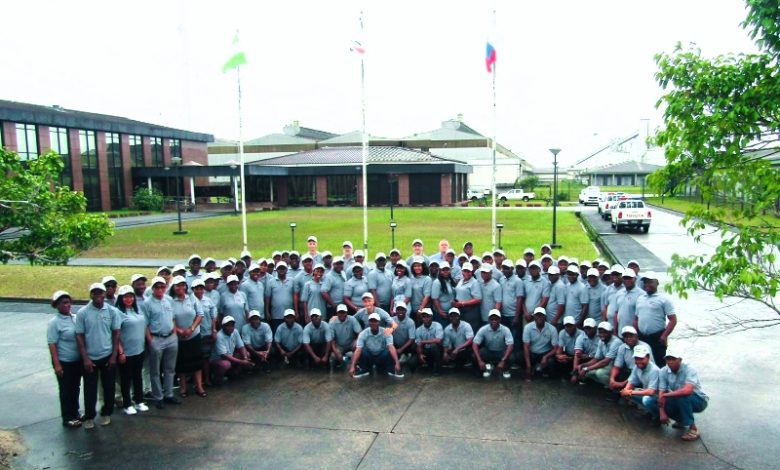
Perhaps the most overlooked achievement is RUSAL’s commitment to retaining a lean but capable workforce of engineers, technicians, electricians, and smelting experts. A staff strength of 130 full time workers are on ground to maintain skeletal service despite absence of direct revenue from the plant for their upkeep. This step alone has preserved institutional memory and ensured that the human capital required to restart the plant has not been lost.
More importantly, RUSAL has not outsourced any technical component of ALSCON’s maintenance or potential operations. Every preserved asset, every system maintained, and every engineering audit conducted has been handled by the company’s own specialists. This reinforces the central fact that RUSAL has all the technical capacity, operational experience, and technological resources to run ALSCON independently and at world-class standards, without reliance on any external operator.
In addition to maintenance, RUSAL has conducted technical audits, feasibility studies on gas and power requirements, and assessments of refurbishment needs. It has also maintained engagement with the Federal Government and host communities, demonstrating its continued commitment to a future restart of the plant.
A fully functional clinic within the factory attends to an average of about eighty patients a day from the community. ALSCON management also supports educational activities and other community development projects in the city of Ikot Abasi and beyond. These sustained activities have ensured that ALSCON has not slipped into the irreversible decline that often affects idle manufacturing plants across the country. Instead, the facility remains structurally sound, technically preserved, and capable of being returned to full production once key policy and operational gaps are resolved.
Nigeria stands at a point where industrial diversification has become more urgent than ever. Reviving ALSCON would stimulate downstream aluminium industries, cable manufacturing, automotive components, building materials, packaging, and trigger high-value job creation across the Niger Delta and beyond. It would also improve Nigeria’s non-oil export earnings and reposition the country within the global metals market.
Henceforth, the path forward requires a clear and coordinated effort:
– Resolving legal and ownership questions once and for all,
– Securing reliable gas and power supply,
-Providing regulatory clarity that supports long-term investment
– Enabling RUSAL to deploy its full capacity without operational hindrance.
ALSCON’s revival is more than an industrial decision, it is a strategic national imperative. With RUSAL already demonstrating both the capacity and technical capability to operate the plant without outsourcing any aspect of smelting operations, Nigeria has a unique opportunity to resuscitate a dormant asset and convert it into a productive engine of national growth. The smelter has survived this long because the operator has kept hope alive. Now the responsibility shifts to policymakers, regulators, and stakeholders to ensure that the next chapter of ALSCON’s story finally delivers the transformation Nigerians have long anticipated.
Pius Ebong is a Metallurgical Engineer and Industrial Development Consultant. You can contact him on +2348033138956 or piusebong@gmail.com