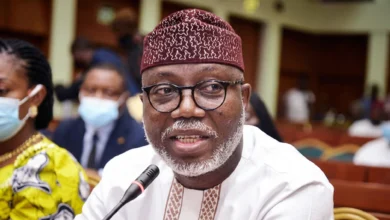


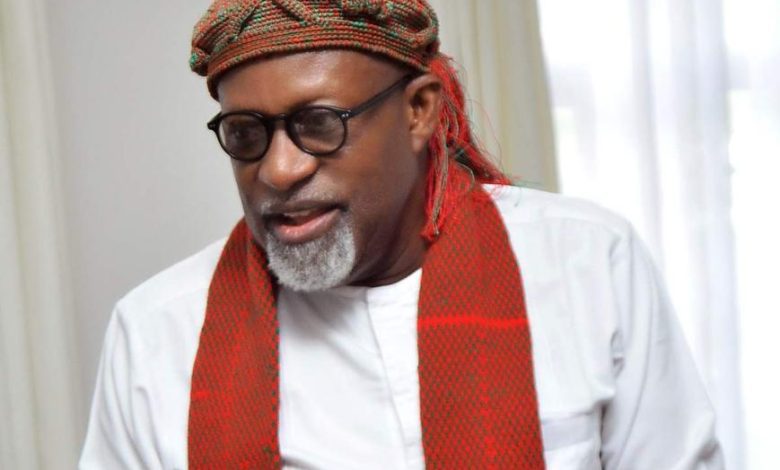
More reactions have continued to trail remarks by Dr. Samuel Udonsak, President-General of the Ekid People’s Union, in which he allegedly declared publicly that Oro Nation is not a littoral state.
Udonsak made the comment in his goodwill address last week at the inauguration of the 12th President and International Executive Council of Mboho Mkparawa Ibibio in Uyo.
The occasion was attended by the Oku Ibom Ibibio and President–General of the Akwa Ibom State Supreme Council of Chiefs, Nteyin Solomon Etuk, alongside other prominent members of different socio cultural groups and the political class.
A video of the event, which surfaced online at the weekend, showed Udonsak saying that no historical map has made the Oro nation, comprising Oron, Mbo, Okobo, Urue Offong Oruko, Udung Uko local government areas, a littoral state


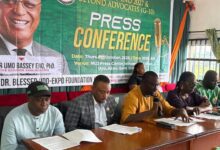
He stated, “No map, and I can repeat, no map in history has made the Oro nation a littoral state. No map. And the attempt today to grab the Ibom seaport is to establish their fact that the Oro nation is a littoral state. It is not. It will not be. And it will not be in our generation.
“The resurgence of Oro-Obolo consciousness and its quest for state creation, if allowed, will render the Ibibios and the Annangs of the Akwa Ibom State economically sterile and devoid of our Atlantic shoreline.”
Oro Nation and Akwa Ibom State leaders have long disagreed over the name change and relocation of the Ibom Deep Seaport, originally conceived as Ibaka Deep Seaport in Mbo Local Government Area.
Oro stakeholders accused the state government of altering the master plan, changing the name, and attempting to relocate the project to a less viable dugout area, while the government has maintained that the current site was chosen by experts and has received federal approval.
OOPU condemns Udonsak’s statement
However, the Oro-Obolo People’s Union (OOPU) rejected Udonsak’s statement, describing it as an attempt to pit one ethnic nationality against another.
In a press statement issued over the weekend and signed by its Publicity Secretary, Chief Esu-Amba Antakikam Amba, the OOPU urged all parties to refrain from making pronouncements that may prejudice sub judice matters or threaten public peace and security.
The Union maintained that the Oro and Obolo peoples are ancient, indigenous maritime nationalities whose settlement and tenure along the Atlantic coastline predate modern statecraft.
“The demand for the creation of Obolo State is a constitutional, peaceful, and legitimate aspiration of the Oro-Obolo Nation, comprising Oron, Okobo, Mbo, Urue Offong/Oruko, Udung Uko, Ibeno, and Eastern Obolo LGAs in Akwa Ibom State, and Andoni LGA in Rivers State.
“It is an exercise in self-determination by a distinct linguistic and cultural nationality seeking administrative cohesion with its kin, pursuant to Section 8 of the Constitution of the Federal Republic of Nigeria.
“OOPU rejects the characterisation of this demand as an attempt to “excise” territory from our Ibibio and Annang brethren. Such a portrayal is a misrepresentation intended to incite ethnic distrust and communal friction”.
The Union OOPU noted that the siting of the seaport should be considered based on the technical, economic, and environmental decision of the Federal and State Governments.
“Our position remains that the project should be located where feasibility studies and the greatest benefit to Akwa Ibom people are guaranteed, which is Ibaka Bay. This matter must not be reduced to an ethnic contest”.
Edet Abia, a journalist and public affairs commentator, reacting as a son of Oro Nation, expressed concern over the remarks.
He said that, rather than delivering the expected goodwill message, Dr. Udonsak chose to use the occasion to launch an unwarranted attack on the identity and geographical reality of the Oro Nation.
According to him, Udonsak’s statement was not only historically inaccurate but also an attempt to deny an obvious geographical fact.
“If Oro nation is not a part of the Atlantic shoreline as he claimed, why then is he so pained about the agitation for state creation which he decried will render Ibibio and Annang sterile? This again confirms that Akwa Ibom State largely depends on Oro for economic viability”.
Abia’s reaction has since generated a series of comments on social media.
Udonsak’s comment capable of provoking ethnic apprehension, antagonism — Oron Union
Reacting to the viral video, Oron Union, the apex socio-cultural organisation of the Oron ethnic groups, stated that the remarks went far beyond a legitimate expression of historical or political opinion and ventured into language capable of provoking ethnic apprehension and antagonism.
In a release on Tuesday signed by its publicity secretary, Prince Edenseting, Oron Union described Udonsak’s remarks as inflammatory and provocative, calling for restraint, responsible leadership, and immediate intervention by the Akwa Ibom State Government.
“We are particularly disturbed by the reported declaration that the Oro Nation is not, and will not be, a littoral state “in our generation,” together with the assertion that particular territories and the Atlantic shoreline belong exclusively to the Ibibio/Ekid people.
These are matters of profound historical, constitutional, geographical and political consequence. They cannot responsibly be settled through grandiloquent declarations at public ceremonies, ethnic mobilisation, social-media rhetoric, or appeals to primordial sentiments.
“Where legitimate disputes exist, they should be subjected to the competent institutions of the Nigerian state, including the courts and other lawful mechanisms of dispute resolution.
“The Oron Union therefore unequivocally rejects any attempt to convert matters requiring sober historical, legal and constitutional examination into a contest of ethnic supremacy.
“Let it be unequivocally understood that Oro people are peace loving, law abiding and constitutionally conscious citizens of Nigeria. Our preference for peace must never be misconstrued as weakness, timidity or an abdication of our legitimate rights.
“The Oro people have no interest in dispossessing any neighbouring ethnic nationality of its lawful rights, nor do we seek conflict with our Ibibio, Ekid, Annang, Nkari, Itu Mbuzor, Obolo or other brothers and sisters with whom we share a common state and a common destiny.
“But peace, properly understood, is not the absence of disagreement. It is the presence of justice, mutual respect, restraint and institutional mechanisms for resolving disagreement”.