


By Piús Ebong
Along the coastal belt of Akwa Ibom State lies an economic opportunity that has remained largely underdeveloped despite its enormous potential.
The fishing corridor stretching through Ibaka, Ebughu, Enwang, Atabong, Asinufot and Oron possesses many of the natural, geographical and human resources required to develop a major seafood industry capable of supplying Nigeria and competing in international markets.
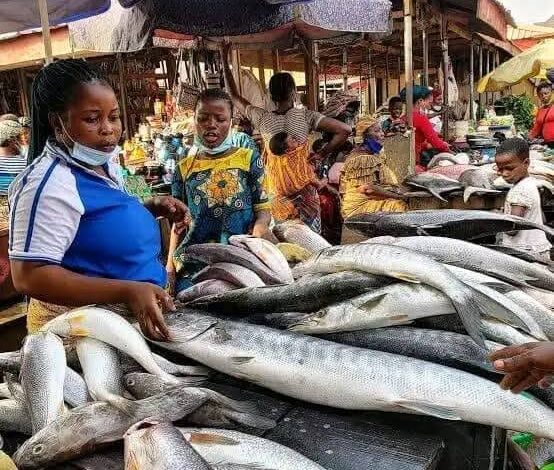
For generations, fishing has been the principal economic activity of many communities in this area. Local fishermen have developed an impressive understanding of the waters, tides, channels, seasons and movement of different species. Yet, despite this wealth of indigenous knowledge and the abundance of aquatic resources, much of the industry remains predominantly artisanal.



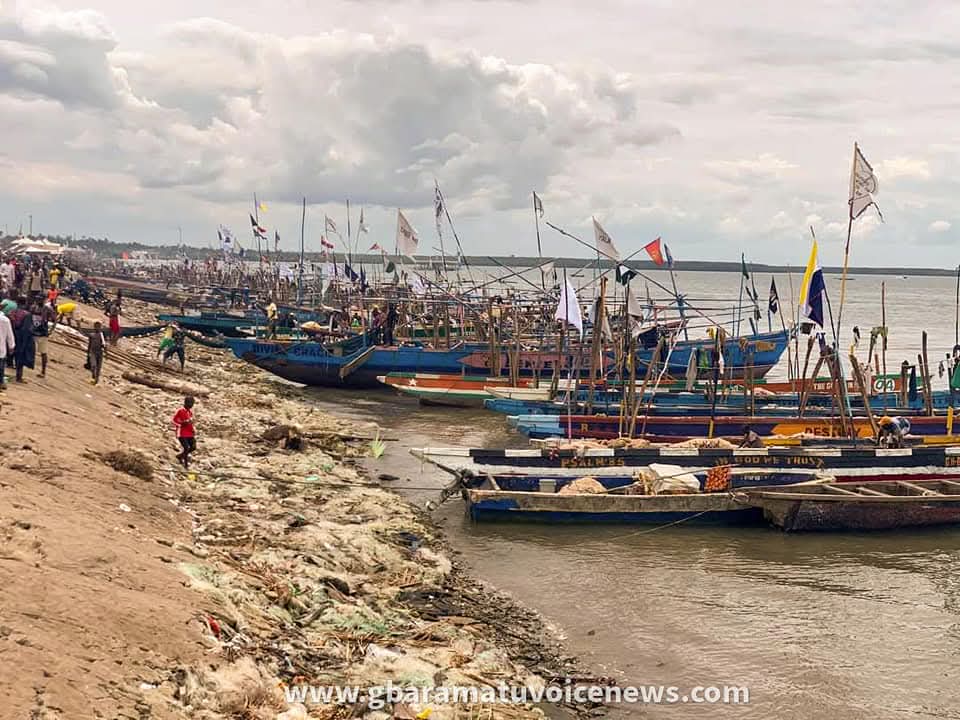
The opportunity now is to transform this traditional fishing economy into a modern, commercially driven and sustainable seafood industry.
This is not simply about catching more fish. It is about building an integrated value chain covering commercial fishing, aquaculture, cold storage, processing, packaging, distribution and export.
From fishing communities to an industrial corridor
The Ibaka–Ebughu–Enwang–Oron axis should no longer be viewed simply as a collection of fishing settlements. It should be regarded as a potential integrated seafood production corridor.
Ibaka has long been one of the most important fishing communities in Akwa Ibom’s coastal region, while Oron has developed into a major centre for seafood trading and distribution. Between them are several communities whose populations have depended on the sea for generations.
Together, these communities provide an extraordinary foundation upon which a modern seafood industry can be built.
A properly planned seafood industrial corridor could accommodate modern fishing and landing facilities, ice plants, cold rooms, refrigerated transportation, fish-processing factories, smoking and drying facilities, aquaculture farms, seafood packaging plants, laboratories and export-oriented logistics.
Such development would fundamentally change the economic character of the area.
Instead of fishermen being compelled to sell their catch immediately, often at relatively low prices, a modern value chain would allow seafood to be preserved, graded, processed, packaged and marketed according to established domestic and international standards.
The greater value would therefore remain within the local economy.
An ocean of commercial possibilities
The opportunity extends far beyond conventional table fish.
The coastal waters, estuaries and associated aquatic ecosystems provide opportunities for the production and processing of a broad range of seafood, including fish, prawns, shrimps, crabs, lobsters and other commercially valuable marine species.
There is also potential for developing specialised, high-value seafood products, including premium fish roe and caviar-type products through controlled aquaculture and appropriate processing technology.
Shrimp and prawn aquaculture could become particularly significant. With scientific assessment, proper hatchery systems and responsible environmental management, commercial aquaculture could complement wild-catch fishing and provide more consistent year-round production.
The underlying principle should be simple:
Every commercially valuable resource should be converted into economic value.
Fish suitable for human consumption can be processed into fresh, frozen, smoked, dried or canned products. Appropriate by-products can be developed into fishmeal, fish oil and other industrial products.
This creates the foundation for a circular seafood economy in which waste is minimised and the value of every catch is maximised.
An industry capable of feeding Nigeria
Nigeria has a huge and growing demand for fish and seafood, while domestic production has not always been sufficient to satisfy consumption.
This creates an important investment opportunity.
Rather than relying excessively on imported seafood, Nigeria can develop coastal production and processing centres capable of supplying supermarkets, hotels, restaurants, food manufacturers and consumers throughout the country.
The vision is straightforward.
Seafood harvested or farmed in Akwa Ibom could be processed, frozen, smoked, dried, packaged and distributed to Uyo, Port Harcourt, Lagos, Abuja and other major Nigerian markets.
With appropriate quality standards and export certification, the same products could subsequently reach markets across West Africa and the wider international market.
The corridor could therefore become both a food-security asset and a foreign-exchange generating industry.
The missing link: industrial investment
The natural resources are already there.
The fishing communities are already there.
The indigenous knowledge is already there.
The domestic market is already there.
What is missing is large-scale investment and coordinated industrial development.
Nigeria now has an opportunity to move from a predominantly artisanal fishing economy to a modern seafood industry built around commercial production, processing and value addition.
That transformation requires investors willing to look beyond the immediate returns from fishing and see the much larger opportunity in building the entire seafood value chain.
And that is where the real opportunity begins.
In Part 2: How indigenous knowledge, modern technology, aquaculture, food-processing industries and Nigeria’s large pool of young people can transform the Ibaka–Ebughu–Enwang–Oron corridor into a West African seafood industrial hub—and why investors in Nigeria and the diaspora should act now.






One Comment