

From Fishing Villages To A West African Seafood Industrial Hub
Part 2: The Investment Opportunity in Akwa Ibom’s Coastal Corridor

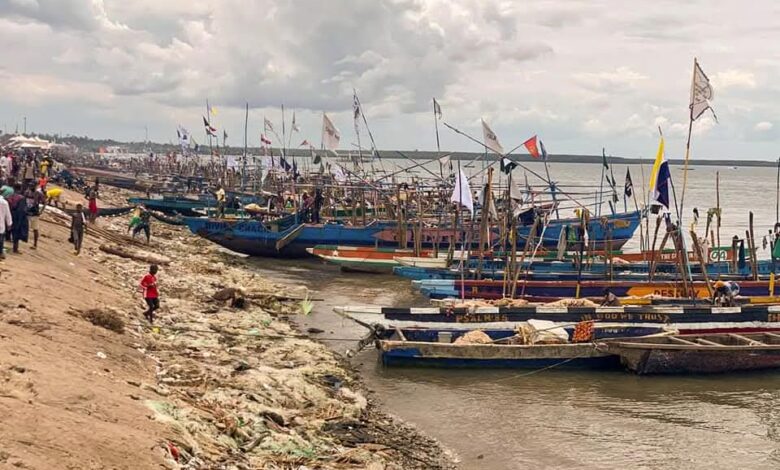
Begin from part 1
The greatest opportunity in Akwa Ibom’s coastal fishing corridor is not simply to expand fishing. It is to industrialise the entire seafood economy.
The corridor stretching through Ibaka, Ebughu, Enwang, Atabong, Asinufot and Oron has the potential to become a major seafood production and processing centre serving Nigeria and the wider West African market.
The transformation, however, must be based on a partnership between indigenous knowledge and modern technology.
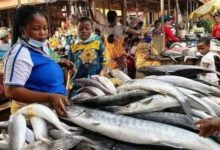



Indigenous knowledge meets modern technology
The people who have lived and worked around these waters for generations possess knowledge that cannot simply be imported.
Local fishermen understand the terrain, waterways, tides, fishing seasons, weather patterns and local marine conditions. They know where and when different species are found and have developed practical methods for navigating the waterways.
This knowledge should become an asset in industrial development.
Modern investors and technical partners can complement it with advanced fishing vessels, navigation and sonar systems, hatchery technology, aquaculture systems, refrigeration, food-processing equipment, packaging technology, laboratory facilities and international food-safety standards.
The objective should therefore not be foreign technology replacing indigenous knowledge, but rather global expertise working with local knowledge.
That combination can produce a uniquely Nigerian seafood industry.
Building the seafood processing industry
The real economic transformation will come from processing.
Instead of exporting or transporting raw seafood with little added value, investors can establish factories producing:
• Frozen fish and seafood;
• Smoked and dried seafood;
Canned seafood;
• Processed prawns and shrimps;
• Packaged crab and other shellfish products;
• Fishmeal and fish oil;
• Premium seafood and aquaculture products;
• Specialised fish-roe and caviar-type products.
Cold-chain infrastructure will be particularly important.
Ice plants, cold rooms, refrigerated trucks and modern storage facilities can dramatically reduce post-harvest losses while allowing seafood to reach distant Nigerian markets in good condition.
The corridor could ultimately support a Seafood Industrial Park, bringing production, processing, storage, packaging, logistics and export services together in one coordinated ecosystem.
A major employment engine for young Nigerians
Perhaps the most important social benefit of industrialising the corridor is employment.
The industry would require far more workers than fishing alone.
It would create opportunities for marine engineers, boat builders, mechanics, electricians, welders, refrigeration technicians, aquaculture specialists, food scientists, laboratory technicians, quality-control officers, drivers, logistics operators, marketers, ICT professionals, administrators and exporters.
Young people could be trained to become skilled workers and entrepreneurs rather than remaining dependent on increasingly limited traditional employment opportunities.
Women could participate significantly in seafood processing, packaging, distribution and marketing.
The development could therefore create a broad-based economic ecosystem rather than simply a few large companies.
A sustainable blue economy
Industrial development must, however, be accompanied by responsible management of marine resources.
The objective should not be uncontrolled exploitation of the sea. Scientific fisheries management, responsible fishing practices, aquaculture, hatchery development, environmental monitoring and effective regulation must form part of the investment framework.
Sustainability is not merely an environmental obligation. It is an economic necessity.
A depleted fishing ground cannot support a profitable industry.
The long-term objective should therefore be to create a seafood economy capable of generating employment, food and wealth for generations.
An invitation to investors
The transformation of the Ibaka–Ebughu–Enwang–Oron corridor should not be left entirely to government.
There is an important role for Nigerian entrepreneurs, institutional investors, banks, development-finance institutions, indigenous businesses and Nigerians in the diaspora.
Diaspora Nigerians with experience in aquaculture, food processing, cold-chain management, logistics, marine engineering and international trade can bring valuable expertise and market connections.
International investors can provide capital, technology and access to global markets.
Nigerian investors can provide local knowledge, entrepreneurship and an understanding of the domestic market.
Government, on its part, can provide the enabling environment, infrastructure, investment incentives, regulation and strategic support.
The result could be a powerful partnership between government, communities, indigenous entrepreneurs and international capital.
The vision: West Africa’s seafood capital
The ultimate vision should be bigger than individual fishing businesses.
Akwa Ibom can aspire to develop the Ibaka–Ebughu–Enwang–Oron axis into a major seafood industrial hub for West Africa.
A place where fish and other seafood are commercially harvested and farmed; where they are processed, preserved and packaged; where young people acquire modern skills; where indigenous knowledge is combined with international technology; where Nigerian consumers are supplied with quality seafood; and where export-quality products leave the state for markets across Africa and beyond.
The opportunity is substantial.
The natural resources are present. The people are present. The market is present.
What is required now is vision, investment, infrastructure and coordinated action.
A passionate call to investors
To Nigerian investors, this is an invitation to look beyond the traditional investment sectors and discover the enormous possibilities of the blue economy.
To Nigerians in the diaspora, this is an opportunity to bring capital, technology, expertise and international market connections back home.
To international investors, this is an opportunity to participate in building an entirely new industrial value chain in one of Africa’s resource-rich coastal regions.
The time has come to move from artisanal fishing to industrial seafood production.
The time has come to move from selling raw catches to creating value-added products.
And the time has come to move from viewing these communities merely as fishing settlements to recognising them as the potential foundation of West Africa’s next great seafood industry.
The sea has been providing a livelihood for the people of this corridor for generations.
Now is the time to turn that livelihood into an industry—and that industry into a regional economic powerhouse.
The opportunity is here. The resources are here. The people are here. What is needed now are investors with the vision and courage to seize it.
Pius Ebong is a Metallurgical Engineer, a Solid Mineral Consultant and an Industrial Development Advisor! You can reach him on +234 803 313 8956 or piusebong@gmail.com




One Comment