

How Akwa Ibom’s New Terminal And Aviation Village Will Reposition The State In Nigeria’s Aviation Sector


By Charles Bassey, Uyo | August, 2026
Governor Pastor Umo Eno has set the tone for September 2026 early. As Akwa Ibom marks 39 years of statehood, the state will commission 39 projects across all 31 Local Government Areas.
But in aviation circles, two projects are being talked about as the real headlines:
1. The New Terminal Building at Victor Attah International Airport, Uyo
2. The Airport Hospital & Aviation Village
The Governor has also declared September a “Month of Gratitude” and expressed hope that President Bola Ahmed Tinubu will visit to commission some of the key projects. If that happens, it will be more than a ceremonial visit. It will be a national endorsement of Akwa Ibom’s bid to become a serious aviation player in Nigeria.



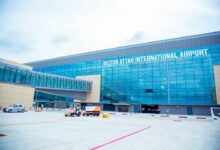
Here’s why these two projects matter, and how they can shift the balance.


1. THE NEW TERMINAL BUILDING: CAPACITY, DIGNITY, AND COMPETITIVENESS
Victor Attah International Airport was built with vision. A 3.6km runway, CAT II capability, and a maintenance hangar. What it has lacked over the years is a terminal that matches that ambition.
The new terminal building is designed to close that gap.
What changes on the ground:
– Expanded capacity: The current terminal gets overwhelmed during peak periods — December, Easter, and the Ibom Christmas Carol season. A larger terminal with more check-in counters, modern baggage systems, and wider arrival/departure halls means the airport can finally handle growth without friction.
– Improved passenger experience: Better seating, climate control, clear wayfinding, lounges, and retail. For a state that markets itself for tourism, religious events, and business, first impressions start at the airport.
– Airline confidence: Carriers make route decisions based on infrastructure. A modern, ICAO-compliant terminal tells Air Peace, United Nigeria, Arik, and Ibom Air that Uyo can support increased frequencies and larger aircraft. It also makes Uyo more bankable for future international routes when the time comes.
– Cargo potential: Akwa Ibom has agriculture, seafood, and manufacturing outputs that need airlift. The new terminal includes provisions for cargo processing. That means farmers in Ikot Ekpene and processors in Onna can get perishables to Lagos, Abuja, and export markets faster.
Strategic positioning: Lagos and Port Harcourt airports are saturated. Delays, congestion, and limited slots are daily realities. A functional, uncongested Uyo becomes the logical alternative gateway for the South-South and South-East. It reduces travel time for millions and decongestes the national airspace.
2. AIRPORT HOSPITAL & AVIATION VILLAGE: BUILDING THE ECOSYSTEM
This is where Akwa Ibom is thinking beyond concrete and glass.
Most states build terminals. Few build the industry around the airport. The Airport Hospital and Aviation Village do exactly that.
The Airport Hospital
Nigeria’s aviation sector has long had a gap in dedicated aviation medicine and emergency response at airports outside Lagos and Abuja.
This hospital will provide:
– 24/7 emergency and trauma response for airside incidents
– Aviation medical centers for pilot, cabin crew, and ATC medicals and licensing
– Support for medical tourism and air ambulance services
For Ibom Air, which is based in Uyo, this means crew can do medicals at home base instead of flying to Lagos. For passengers, it means safety assurance.
The Aviation Village
This is the economic engine. The concept clusters aviation-related businesses around the airport:
– Flight training schools and simulators
– MRO support services and parts suppliers
– Crew hotels, rest facilities, and catering companies
– Logistics, courier, and cargo firms
– Aviation fuel and ground handling support offices
Why this is a big deal for Nigeria:
1. Jobs and skills development: Nigeria faces a shortage of certified aircraft engineers, technicians, and aviation managers. A village creates training pipelines right in Akwa Ibom, reducing capital flight for training.
2. Lower operating costs: When airlines can do training, crew layovers, and light maintenance in one location, costs drop. That makes Uyo attractive as a mini-hub.
3. Investment magnet: Aviation villages attract hotels, banks, real estate, and service companies. The airport stops being just a point of departure and becomes a business district.
4. Support for Ibom Air: As Nigeria’s only state-owned airline with a national footprint, Ibom Air gets a home base with full ecosystem support. That strengthens its expansion plans and makes it more competitive.
THE NATIONAL IMPLICATION: DECENTRALIZING AVIATION GROWTH
For decades, Nigeria’s aviation narrative has been Lagos + Abuja. Akwa Ibom’s approach challenges that.
1. Regional equity: A world-class terminal + ecosystem in Uyo gives the South-South and parts of South-East direct access to quality air travel without transiting through Lagos.
2. Economic diversification: Aviation becomes a driver for tourism, trade, and foreign investment in Akwa Ibom. The state’s industrial park, deep seaport plans, and now airport upgrade form a connected logistics triangle.
3. Model for subnationals: If a state government can deliver this, it sets a template. Other states with airports can move from “waiting for FAAN” to “building our own aviation economy.”
Governor Eno’s invitation to President Tinubu is key. Presidential commissioning would signal federal alignment with state-led aviation development — critical for policy support, route approvals, and international partnerships.
CHALLENGES TO WATCH
No project succeeds on announcement alone. Three things will determine impact:
1. Sustainability: Staffing, power, and maintenance of the terminal and hospital must be world-class from day one.
2. Airline partnerships: The infrastructure must be matched with incentives and agreements to bring in more airlines and routes.
3. Security and ease of access: Road links from Uyo city and neighboring states must support the increased traffic.
CONCLUSION: FROM GATEWAY TO HUB
September 2026 is being framed as gratitude. In aviation, gratitude will be measured in on-time departures, new jobs, new routes, and new businesses.
The New Terminal Building gives Akwa Ibom the capacity. The Airport Hospital & Aviation Village give it the ecosystem. Together, they move the state from “having an airport” to “running an aviation hub.”
For 39 years, Akwa Ibom has built a reputation for visionary projects. With these two aviation projects, the state is not just celebrating its past. It is positioning itself for the next 39 years of Nigeria’s aviation future.
If you build it right, they will fly in. And this September, Akwa Ibom is building it right.
• Charles Bassey is a member of Aviation Correspondents of Akwa Ibom state